

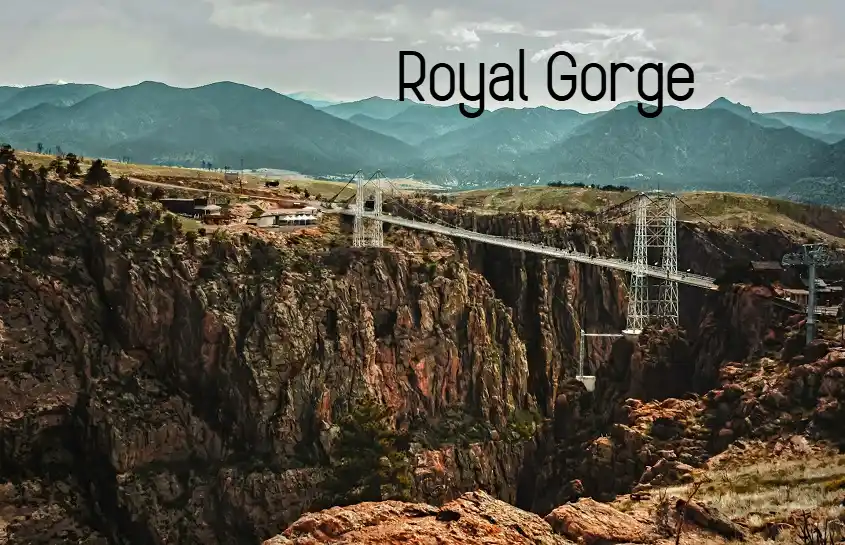
Royal Gorge: Where Colorado’s Canyon Touches the Sky
Some landscapes announce themselves loudly. Others don’t need to. This canyon in central Colorado belongs to the second kind. You don’t always feel it immediately. At first, it’s just land. Rock. A river somewhere below. But then perspective shifts. Distance behaves strangely. Sound travels in unexpected ways. That’s usually when people stop talking and start looking. Royal Gorge sits near Cañon City, carved deep by the Arkansas River and framed by walls of ancient granite. It isn’t the widest canyon in the country. It isn’t even the longest. Still, very few places feel this vertical, this sudden, this close to the sky.
People arrive curious. They leave more quietly.
A Canyon That Refuses to Feel Small
Geology books explain how the Arkansas River spent millions of years cutting downward while the Rocky Mountains slowly rose. That explanation is accurate, but it doesn’t fully prepare you.
From above, the canyon looks narrow. Almost manageable. From the edge, it feels endless. The walls drop sharply, nearly straight down, creating an illusion that the river is much closer than it actually is.
Sound behaves oddly here. The river looks calm, but its echo carries upward. Wind slips through uneven rock faces. Even on busy days, there are moments when the place feels still.
Some visitors describe excitement. Others describe discomfort. Both reactions make sense.
The Structure That Changed How People See the Canyon
Before modern tourism, this was simply a difficult landscape to cross. Then came an idea that seemed unreasonable at the time. Build a bridge. Build it high. Build it anyway.
The Royal Gorge Bridge was completed in the late 1920s and immediately changed the story of the canyon. It wasn’t built for transportation efficiency. It was built to prove it could be done.
Suspended high above the river, the bridge became a landmark almost overnight. For decades, it held the title of the world’s highest suspension bridge. Even now, long after taller structures exist elsewhere, its impact hasn’t faded.
Engineering aside, it altered how people experienced the canyon. Suddenly, visitors could stand above the void instead of just looking into it.
Crossing the Bridge Feels Personal

Walking across the bridge royal gorge isn’t dramatic in the way movies make it seem. There’s no music. No countdown. Just steps.
Most people slow down naturally. The height becomes real about halfway across. The bridge moves slightly. Not enough to feel unsafe. Enough to notice.
Some people focus straight ahead. Others lean toward the railing. Looking down is optional, but difficult to resist. The river below appears small and distant, which somehow makes the height feel greater.
People react differently. Some laugh it off. Some turn back early. Some cross twice, just to be sure they did it.
It’s Not Only About the Bridge
The Royal Gorge and bridge experience includes more than a single structure. The surrounding area has grown into a place where visitors can choose their own pace.
There are overlooks where people linger longer than expected. Gondolas drift quietly across open space, offering a smooth contrast to the sharp drop below. Zip lines cut through the air for those who want movement instead of stillness.
None of these attractions feels mandatory. That matters. You don’t feel pushed from one activity to the next. You’re allowed to pause. That’s not common at destinations like this.
The Train That Takes the Long Way Through
Not everyone wants to be high above the canyon. Some prefer to move through it instead.
The royal gorge train follows tracks laid during the railroad expansion era, hugging the river as it passes through narrow sections of the canyon. It’s slower than driving. That’s intentional.
Windows frame rock walls that rise sharply just beyond the tracks. In some sections, the canyon feels close enough to touch. The train doesn’t rush these moments.
People often ask, How long is the Royal Gorge train ride, and the answer usually surprises them. Roughly two hours round trip. It doesn’t feel like a schedule. It feels like time set aside.
Conversation tends to fade as the canyon closes in.
What Makes the Train Different
Unlike the bridge, the train doesn’t demand bravery. It offers immersion instead. The sound of wheels on rail blends with the river. The pace allows details to appear slowly.
Some trips include dining, turning the ride into something closer to a moving meal than an attraction. People talk less. They watch more.
It’s especially popular with families and visitors who prefer comfort over adrenaline. That doesn’t make it less memorable. Just different.
Some say they remember the train longer than the bridge. Others say the opposite.
Read More: The Untold Story of Snake Mound Ohio and Its Mysterious Builders
Wildlife Has Its Own Rules Here
Despite steep rock faces and limited space, the canyon supports life in ways that surprise first-time visitors. Bighorn sheep move across ledges that look impossible from below. They stop. They look back. Then they continue.
Birds of prey are easier to spot than you might expect. Eagles and hawks circle above the canyon, using rising air currents to stay aloft with little effort.
Wildlife sightings aren’t guaranteed. That unpredictability adds to the experience. It reminds you that this isn’t a staged environment.
Nature still sets the rules.
Seasonal Changes Alter the Mood
Spring brings movement. Snowmelt increases river volume, making the canyon louder and more restless. Summer calms things down. Clear skies and long days encourage exploration.
Autumn adds color in unexpected places. Not the canyon walls, but the surrounding vegetation. The contrast softens the landscape.
Winter is quieter. Fewer visitors. Snow collects in shaded areas. The bridge looks sharper against pale rock. Some people prefer it this way.
There isn’t a wrong season. Just different versions of the same place.
Adventure Exists, But It’s Optional
For those who want it, adventure is available. Whitewater rafting on the Arkansas River ranges from relaxed floats to challenging rapids, depending on conditions. Rock climbing routes appeal to experienced climbers looking for vertical challenge.
Zip lines and aerial rides provide moments of speed and exposure. They aren’t subtle. They’re meant to be felt.
Still, you don’t have to do any of it. Standing at an overlook can be enough.
That balance is rare.
Photography Comes Easily, Meaning Comes Slowly

Cameras love this canyon. Early light deepens shadows. Midday reveals texture. Sunset softens edges.
But the most lasting impressions often aren’t photographed. They happen when someone stops trying to capture the view and just lets it exist.
Phones come out. Phones go away. Silence settles in.
That usually says more than any picture.
Human History Runs Alongside the River
The canyon isn’t only a natural feature. It’s also a place shaped by human ambition. During the late 1800s, rival railroad companies fought fiercely for control of the narrow passage.
Legal battles turned physical. Guards were posted. Tensions escalated. The conflict became known as the Royal Gorge Railroad War.
Eventually, courts settled what force could not. Trains continued. History moved on.
The land remained.
Planning a Visit Without Overthinking It
Visitors often plan too tightly. This is not a place that rewards rushing.
Comfortable shoes matter more than schedules. The weather changes quickly. Wind appears without warning. Layers help.
Allowing extra time usually leads to the best moments. A longer pause. A second look. A choice not to hurry.
This canyon doesn’t respond well to checklists.
Read More: Cenotes Tulum Adventures: Swim, Snorkel, and Explore Hidden Wonders
Why People Remember It Differently
Ask ten visitors what stood out most and you’ll get ten different answers. The height. The quiet. The train. The moment they stopped being afraid.
That’s the point.
Royal Gorge doesn’t offer a single reaction. It allows space for personal ones. That’s why it stays with people longer than expected.
It doesn’t demand attention. It earns it.
Conclusion on Royal Gorge
Some destinations impress you for a moment and then fade. This canyon doesn’t work that way. It settles in quietly. Days later, you might remember the sound of the river or the way the wind moved across the bridge. It returns without effort.
What makes this place special isn’t just height or history. It’s the way it allows people to experience it differently. Some come for the views. Some for the train ride. Others simply stand still and look down. All of those experiences are valid.
In the end, the canyon doesn’t ask you to understand it completely. It only asks you to slow down long enough to notice. And for many visitors, that simple pause becomes the most memorable part of the journey.
Frequently Asked Questions about Royal Gorge
Q: Where is the Royal Gorge located?
A: It is near Cañon City in central Colorado along the Arkansas River.
Q: Is the Royal Gorge Bridge safe for visitors?
A: Yes, it is regularly inspected and designed for pedestrian use.
Q: How long is the Royal Gorge train ride?
A: The round trip typically lasts about two hours.
Q: Are there activities besides the bridge and train?
A: Yes, including gondolas, rafting, zip lines, and scenic overlooks.
Q: What is the best time of year to visit?
A: Late spring through early fall offers the widest range of access.


