





Best Ski Resorts in Europe: A Practical Guide to the Best Skiing, Ski Towns, and Ski Areas
When people start planning a winter trip, Europe usually comes up early in the conversation—and for good reason. The continent offers some of the best ski resorts in Europe, with a mix of reliable snow, varied terrain, and mountain towns that feel authentic rather than artificial.
What makes the best skiing in Europe stand out is not just the quality of the slopes; it is also the unique experiences that accompany them. It’s the full experience. You can spend the morning skiing across wide open runs, stop for lunch halfway up a mountain, and end your day in a village that has been around for generations. It doesn’t feel rushed or overly commercial if you choose the right destination.
Across Europe, especially in the Alps, you’ll find some of the best ski areas in Europe, many of which are interconnected. That means you can ski across multiple resorts without needing transport—something that’s hard to find anywhere else in the world.
What Defines the Best Ski Resorts in Europe
Not every ski resort offers the same kind of experience. Some are designed for beginners, while others are built for experienced skiers, and some focus more on the town’s atmosphere than the slopes themselves.
The best ski resorts in Europe usually share a few key qualities.
They have large skiable areas, so you’re not repeating the same runs all day. They offer reliable snow conditions, often thanks to high altitude. The lift systems are efficient, meaning less waiting and more skiing. And just as importantly, they are located in towns that have personality—places where you can actually enjoy your time off the slopes.
Another important factor is how easy it is to move around. In the best ski areas in Europe, everything connects naturally. You don’t spend time figuring out routes—you just follow the mountain.
Chamonix, France – One of the Best Places to Ski in Europe for Adventure
Chamonix is often mentioned when talking about the best places to ski in Europe, especially for people who want something more than just groomed slopes.
This is not a resort that tries to simplify everything. The terrain is serious, and in some areas, it can be quite challenging. That’s why it attracts experienced skiers from around the world. The off-piste skiing here is particularly well known, and the views around Mont Blanc make every run feel memorable.
The town itself doesn’t feel like a purpose-built resort. It feels like a real place, with a mix of old buildings, small shops, and everyday life. That’s part of its appeal. You’re not just visiting for skiing—you’re stepping into a mountain environment that feels established and genuine.
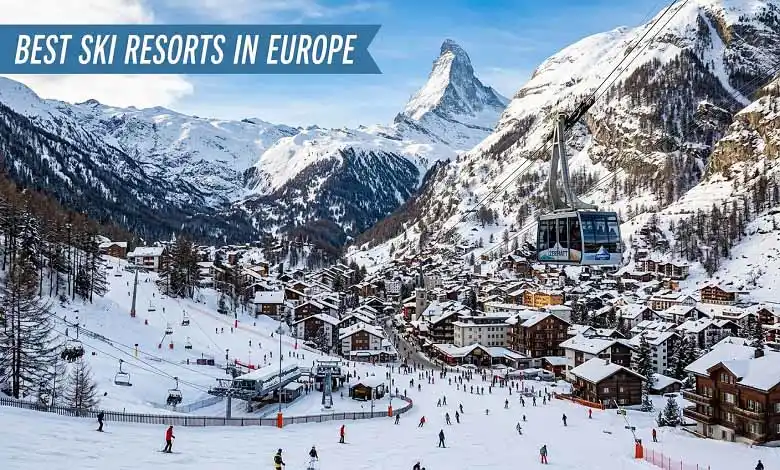
Zermatt, Switzerland – Reliable Snow and Iconic Scenery
Zermatt consistently ranks among the best ski resorts in Europe, and one of the reasons is its reliability. The altitude here means that snow conditions are usually strong throughout the season.
The presence of the Matterhorn changes the experience completely. It’s visible from almost everywhere, and it adds a sense of scale that’s hard to ignore. Even after a few days, it still stands out.
The skiing in Zermatt suits a wide range of abilities, but it is particularly comfortable for intermediate skiers. The runs are long, well-maintained, and easy to follow.
Another thing that makes Zermatt unique is that it is a car-free town. This changes the atmosphere in a subtle way. It feels quieter, more organized, and easier to explore on foot.
Les Trois Vallées, France – The Largest and Most Connected Ski Area
When it comes to the best ski areas in Europe, Les Trois Vallées is always part of the conversation. The size alone sets it apart. It includes several well-known resorts, all connected into one massive network.
What this means in practical terms is that you can ski all day without repeating the same route. Each valley has its own feel, so the experience changes as you move through the area.
Some sections are more upscale, others are more relaxed, but everything is linked. That’s what makes it such a strong choice for longer trips. You don’t run out of options.
For skiers who like variety, this is one of the most complete destinations in Europe.
St. Anton, Austria – A Classic Ski Town with Energy
St. Anton is often described as one of the best ski towns in Europe, and it earns that reputation for more than one reason.
The skiing itself is strong, especially for intermediate and advanced levels. The terrain is varied, and the snow conditions are usually good. But what really defines St. Anton is the atmosphere.
This is a place where the day doesn’t end when the lifts close. The après-ski scene is lively, and it starts early. People gather, socialize, and continue the day in a more relaxed way.
Despite that energy, the town still feels traditional. It hasn’t lost its alpine character, which keeps it grounded.
Cortina d’Ampezzo, Italy – Scenic and Relaxed Skiing
Cortina offers a different kind of experience compared to many other resorts. It is often included in discussions about the best places to ski in Europe, but not because it is the most intense or challenging.
Instead, it stands out for its setting. The Dolomites have a unique look, with sharp peaks and open views that feel almost cinematic. Skiing here feels less rushed.
The slopes are well-suited to intermediate skiers, and the overall pace is slower. People take their time, and the experience includes more than just skiing.
Food is another highlight. The Italian influence is noticeable, and meals tend to be a bigger part of the day compared to other regions.
Other Best Places to Ski in Europe Worth Considering
While the Alps dominate, there are other destinations that deserve attention.
In Eastern Europe, resorts like Bansko in Bulgaria offer good skiing at a lower cost. These places are becoming more popular because they provide solid value without sacrificing too much in quality.
Scandinavian countries offer a quieter experience. The landscapes are different—more open, less crowded—and the pace is slower. It’s a good choice for those who want something less busy.
Spain’s Sierra Nevada is another interesting option. It’s not as large as Alpine resorts, but it offers a unique combination of snow and sunshine.
What Makes the Best Ski Towns in Europe Stand Out
The best ski towns in Europe are not just places to stay—they are part of the experience.
They often have:
- Traditional architecture
- Walkable streets
- Local restaurants and cafés
- A sense of history
These towns don’t feel temporary. They feel established, which makes your stay more comfortable and memorable.
Each country has its own style. Austria tends to be lively, Switzerland is more refined, France offers variety, and Italy focuses on atmosphere and food.
Choosing the Best Ski Resort for Your Trip
Finding the right destination depends on what you want from your trip.
If you are new to skiing, look for places with wide, gentle slopes and good instruction options.
If you are more experienced, choose resorts with varied terrain and opportunities to explore beyond marked runs.
Think about the kind of environment you prefer. Some people enjoy busy, social resorts, while others prefer quieter locations.
Budget also matters. Some resorts are known for luxury, while others offer more affordable options without losing the core experience.
Best Time to Experience Skiing in Europe
The ski season in Europe usually runs from December through April.
January and February are the most reliable months for snow. March is often the most enjoyable because the days are longer and the weather is more comfortable.
Higher altitude resorts tend to have longer seasons, so they remain a good option later in the year.
Conclusion
The best ski resorts in Europe offer more than just good skiing. They provide a complete experience that includes the landscape, the towns, and the overall pace of life in the mountains.
From large, connected ski areas to smaller, more relaxed destinations, Europe gives you a wide range of choices. Whether you are looking for adventure, comfort, or something in between, there is a place that fits.
The key is to choose based on what matters to you—not just what is popular. Once you find the right place, the experience tends to stay with you long after the trip is over.


