


Racehorse Falls: A Scenic Waterfall Adventure Near Mount Baker
If you are looking for a beautiful waterfall adventure in Washington’s Mount Baker region, Racehorse Falls is a destination worth adding to your itinerary. Tucked into a forested landscape near Deming, Washington, this waterfall offers rushing cascades, moss-covered surroundings, and the peaceful atmosphere of the North Cascades.
Unlike some of the region’s longer mountain hikes, Racehorse Falls can be reached through a relatively short trail. The waterfall is part of Racehorse Creek, which flows through a dramatic forested canyon and creates several sections of cascading water.
Its combination of accessibility, natural scenery, and proximity to other attractions along the Mount Baker Highway makes Racehorse Falls an appealing stop for hikers, photographers, and travelers exploring northwest Washington.
Where Is Racehorse Falls?
Racehorse Falls is located near Deming, Washington, in Whatcom County, in the foothills of the Mount Baker area. The falls are reached from the general SR 542/Mount Baker Highway corridor before turning toward Mosquito Lake Road and North Fork Road.
The surrounding area is characterized by dense Pacific Northwest forest, mountain streams, and rugged terrain. The drive itself can be part of the experience, particularly for travelers exploring the Mount Baker Highway.
Racehorse Falls is not located directly beside the main highway. Visitors need to follow local roads toward Racehorse Creek before reaching the trail area.
What Makes Racehorse Falls Special?
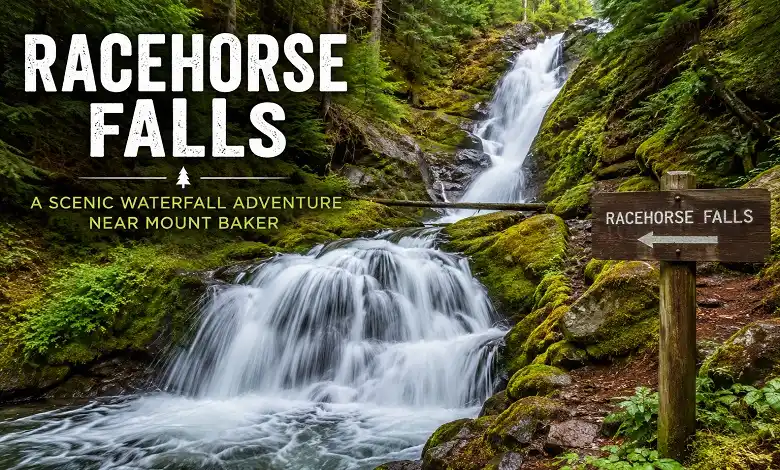
One of the most interesting things about Racehorse Falls is that it is more than a single dramatic drop. Racehorse Creek produces several waterfall sections, including upper, middle, and lower falls.
The water moves through a rocky canyon surrounded by trees, creating a scenic combination of rushing water, forest, and exposed rock. During periods of higher water flow, the cascades can become particularly impressive.
The waterfall has been described as a short forest walk leading to a canyon filled with frothy cascades. However, the trail can be muddy and uneven, and some sections near the creek require additional caution.
For photographers, the combination of flowing water and lush greenery creates plenty of opportunities for close-up nature photography.
How Long Is the Racehorse Falls Hike?
One commonly documented route is approximately 1.1 miles round trip, with around 124 feet of elevation gain.
That makes the main hike relatively short compared with many of the larger trails around Mount Baker.
However, distance alone should not be used to judge difficulty. The trail has reportedly been uneven and muddy in places, and some portions near the falls can be more challenging than the short mileage suggests. Washington Trails Association trip reports have also noted that the trailhead can be difficult to identify and that some sections around the falls require care.
If you are travelling with children or inexperienced hikers, stay on safer sections of the route and avoid getting too close to steep creek edges.
The Upper, Middle, and Lower Falls
One of the highlights of visiting Racehorse Falls is the opportunity to see different sections of the waterfall system.
The upper section is reached relatively quickly from the trail, while additional viewpoints can reveal larger cascades farther along Racehorse Creek. A Washington Trails Association trip report specifically notes upper, middle, and lower waterfall sections, with the middle fall being particularly large.
Rather than rushing to the first viewpoint and leaving, take some time to appreciate the surrounding forest and listen to the creek. The sound of rushing water is one of the most memorable parts of the experience.
When Is the Best Time to Visit Racehorse Falls?
The best time to visit depends on what you want to experience.
Spring and early summer can be excellent for waterfall viewing because increased runoff can produce stronger flows. A recent waterfall reference also identifies spring and early summer as a favourable period for higher water flow.
Summer can provide more comfortable hiking conditions, although the Pacific Northwest can still experience wet weather.
Fall brings changing foliage and a different atmosphere to the forest. The combination of autumn colours and moving water can make this a particularly attractive time for photography.
Winter visits require considerably more caution because snow, ice, mud, and changing road conditions can affect access.
Before setting out, check current road and trail conditions rather than relying solely on older trip reports.
Getting to Racehorse Falls
If you are coming from the Bellingham area, the general approach is to travel east on State Route 542, also known as the Mount Baker Highway. From the highway, visitors turn toward Mosquito Lake Road and then continue toward North Fork Road and Racehorse Creek.
The route includes roads that can become rougher as you move away from the main highway. Past reports have also described sections of North Fork Road as transitioning from pavement to gravel.
Because access conditions can change following storms, flooding, road maintenance, or other events, verify the current condition before driving to the trailhead.
Also keep in mind that the trailhead has historically been unsigned or difficult to identify.
What Should You Bring?
Even though the hike is short, it is worth preparing properly.
Bring:
- Sturdy hiking shoes with good traction
- Water and a small snack
- A rain jacket
- A phone or offline map
- Basic first-aid supplies
- Extra layers during cooler months
- A camera if you enjoy waterfall photography
Good footwear is particularly important because wet rocks, mud, roots, and uneven ground can make the trail more slippery than expected.
Safety Tips for Visiting Racehorse Falls
Racehorse Falls is beautiful, but visitors should not underestimate the environment.
The creek, rocks, and canyon can become hazardous when wet. Avoid climbing directly beside the waterfalls or attempting to reach viewpoints that require scrambling beyond your comfort level.
Do not assume that a visible path is an official, maintained trail. Some reports describe portions of the route as unofficial or poorly marked.
Keep children close, especially around the creek and steep edges. Dogs should also be supervised carefully.
Weather is another important consideration. Heavy rain can increase creek flow and make rocks extremely slippery. If conditions look unsafe, it is better to enjoy the area from a safer viewpoint and return another day.
Racehorse Falls Photography Tips
Racehorse Falls is a great location for nature photography because you can capture both wide landscape scenes and detailed waterfall shots.
For wider photographs, include the surrounding trees and canyon to show the scale of the landscape. For close-ups, focus on the movement of water over rocks, moss, and small cascades.
Overcast weather can actually work well for waterfall photography because it reduces harsh shadows and produces softer, more balanced light.
A tripod can help if you want to experiment with longer exposures, but always place your equipment in a stable and safe location away from the creek.
Other Things to See Near Racehorse Falls
One advantage of visiting Racehorse Falls is its location within the broader Mount Baker Highway region.
The SR 542 corridor provides access to numerous outdoor attractions, scenic viewpoints, hiking areas, and mountain destinations. The highway itself is known for its forests, rivers, and mountain scenery as it travels toward Mount Baker.
You can combine a visit to Racehorse Falls with other nearby stops depending on the season, road conditions, and how much time you have.
Popular destinations in the broader Mount Baker area include Nooksack Falls, Horseshoe Bend, Skyline Divide, and Artist Point. Each offers a different experience, from riverside walks to expansive mountain views.
Is Racehorse Falls Worth Visiting?
For travelers who enjoy waterfalls and short outdoor adventures, Racehorse Falls can be a rewarding stop.
The hike is short, but the scenery feels distinctly Pacific Northwest. Dense forest, rushing water, mossy rocks, and the surrounding mountains create a peaceful setting that feels far removed from busy city life.
It is especially appealing if you are already exploring the Mount Baker Highway and want to add a waterfall stop without committing to an all-day hike.
Just remember that the short distance does not mean the trail is completely effortless. Conditions can be muddy, access can change, and some sections near the creek require caution.
Final Thoughts
Racehorse Falls is one of those places that demonstrates why the Mount Baker region is so popular with outdoor travelers. The short route, forest scenery, and multiple cascading sections make it an enjoyable destination for a day of exploring northwest Washington.
If you are planning a trip through the Mount Baker area, consider putting Racehorse Falls on your itinerary alongside other attractions along SR 542. Pack proper footwear, check current conditions, respect the natural environment, and take your time enjoying the sound and scenery of Racehorse Creek.
Sometimes the most memorable travel experiences are not the longest hikes or the most famous viewpoints—they are the quiet trails that lead you into the forest and reveal something beautiful along the way.
Frequently Asked Questions About Racehorse Falls
Q: Where is Racehorse Falls located?
A. Racehorse Falls is located near Deming in Whatcom County, Washington, within the Mount Baker region. It can be accessed from the SR 542/Mount Baker Highway area via local roads leading toward Racehorse Creek.
Q: How long is the Racehorse Falls hike?
A. The commonly documented route is about 1.1 miles round trip, with approximately 124 feet of elevation gain. Although the distance is short, muddy, uneven, and slippery sections can make the hike more challenging than the mileage suggests.
Q: When is the best time to visit Racehorse Falls?
A. Spring and early summer are generally good times to see stronger waterfall flows because of seasonal snowmelt and rainfall. Fall can also be beautiful because of the changing foliage. Always check current road and trail conditions before visiting.
Q: Is Racehorse Falls suitable for beginners?
A. The short distance makes Racehorse Falls appealing to beginners, but visitors should still be prepared for uneven terrain, mud, slippery rocks, and potentially difficult-to-follow trail sections. Stay on safer sections of the route and avoid getting too close to the creek or waterfall edges.
Q: Can you visit Racehorse Falls with children?
A. Families can visit Racehorse Falls, but children should be supervised closely. The creek, wet rocks, steep areas, and uneven terrain can create safety hazards. Sturdy footwear and careful route selection are recommended.


