




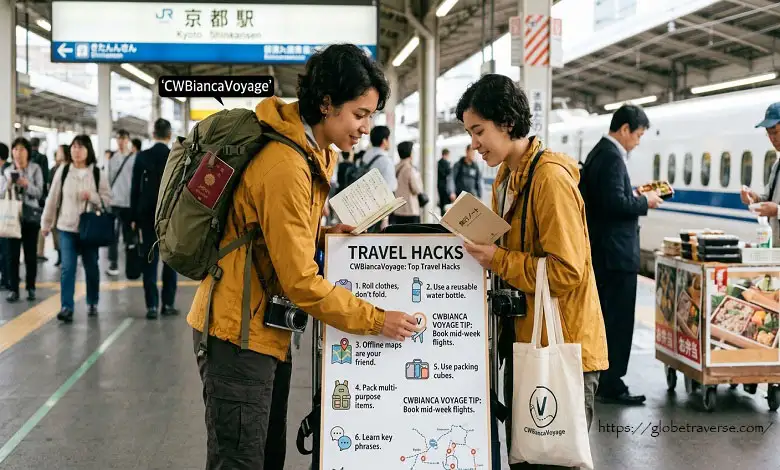
Travel Hacks CWBiancaVoyage: 20 Smart Tips for Easier and Better Trips
Travelling is one of the best ways to explore new destinations, experience different cultures, and create unforgettable memories. However, planning a trip can sometimes feel overwhelming, especially when dealing with flight bookings, accommodation, packing, transportation, and travel expenses. This is where Travel Hacks CWBiancaVoyage can help travellers make their journeys easier, more organised, and enjoyable.
Whether you are planning a weekend getaway, an international holiday, or a long adventure, following practical travel strategies can save time, reduce unnecessary expenses, and prevent common travel problems. Small decisions, such as booking flights at the right time, packing efficiently, and keeping important documents organised, can make a significant difference.
In this guide, we will explore 20 useful travel tips inspired by the idea of travelling smarter. These traveling hacks CWBiancaVoyage are designed for beginners, experienced travellers, solo adventurers, and families who want to enjoy better travel experiences without unnecessary stress.
What Are Travel Hacks CWBiancaVoyage?
Travel Hacks CWBiancaVoyage refers to practical ideas, strategies, and useful recommendations that help people improve their overall travel experiences. These hacks focus on making travel more convenient, affordable, comfortable, and organised.
Travelling does not always have to be expensive or complicated. With proper preparation and a few smart techniques, you can avoid common mistakes and enjoy more of your destination.
Some useful travel hacks include:
- Finding affordable flight tickets.
- Packing luggage more efficiently.
- Choosing convenient accommodation.
- Keeping travel documents organised.
- Saving money on transportation.
- Using technology to simplify trip planning.
- Preparing for unexpected travel situations.
The main goal is to spend less time worrying about travel arrangements and more time enjoying your journey.
Read Also: Best Time to Visit Bora Bora: A Complete Month-by-Month Travel Guide
20 Smart Travel Hacks CWBiancaVoyage for Easier and Better Trips
Here are 20 practical travel hacks that can help you plan your next adventure more effectively.
1. Book Your Flights in Advance
Flight prices can change depending on demand, season, destination, and availability. Booking your tickets in advance can sometimes help you find better prices and more convenient flight options.
Start researching flights several weeks or months before your planned departure. Compare different airlines, departure times, and connecting routes before making a decision.
You can also use flight comparison platforms to monitor ticket prices and receive notifications when fares change.
Useful tip: Keep your travel dates flexible whenever possible. Flying on a different day may offer better prices.
2. Travel During the Off-Season
One of the easiest ways to reduce travel expenses is to visit destinations during their off-season or shoulder season.
Popular tourist destinations often become expensive during school holidays, festivals, and peak vacation periods. During quieter months, you may find more affordable hotels, fewer crowds, and a more relaxed atmosphere.
However, research the local weather before booking. Some destinations experience heavy rainfall, extreme temperatures, or seasonal transportation disruptions.
Travelling during the right season can help you enjoy a destination without spending unnecessarily.
3. Create a Packing Checklist
Packing without a checklist can lead to forgotten essentials and unnecessary luggage.
Before leaving home, create a list of everything you need for your journey. Divide the checklist into categories such as clothing, toiletries, electronics, travel documents, and personal items.
A simple packing checklist might include:
- Passport and identification.
- Flight tickets and hotel confirmations.
- Comfortable clothing.
- Toiletries and personal care products.
- Phone charger and power bank.
- Prescription medications, if applicable.
- Travel insurance information.
- Reusable water bottle.
A checklist makes packing easier and reduces the possibility of forgetting important belongings.
4. Roll Your Clothes to Save Space
Rolling clothes instead of folding them traditionally is a popular packing technique.
This method can help organise your suitcase and make better use of available space. It is particularly useful when travelling with a small suitcase or carry-on bag.
You can also use packing cubes to separate different types of clothing. For example, keep shirts in one cube, trousers in another, and undergarments in a separate section.
Remember that rolling does not eliminate wrinkles in every fabric, so fold delicate clothing appropriately.
5. Use Packing Cubes for Better Organisation
Packing cubes are useful accessories for travellers who want to keep their luggage organised.
Instead of placing everything randomly inside your suitcase, divide your belongings into separate compartments.
For example, you can use different cubes for:
- Everyday clothing.
- Workout or outdoor clothing.
- Undergarments and socks.
- Sleepwear.
- Dirty laundry.
Packing cubes make it easier to locate specific items without unpacking your entire suitcase.
They are particularly helpful during multi-destination trips when you frequently move between hotels.
6. Keep Digital Copies of Important Documents
Losing important travel documents can create serious problems, especially when travelling internationally.
One useful approach is to keep digital copies of your passport, identification, travel insurance, hotel reservations, and flight confirmations.
Store these documents in a secure cloud account or an encrypted digital storage application.
It is also sensible to keep physical copies of essential documents separately from the originals.
Important: Digital copies are useful backups, but they do not replace original documents when authorities or airlines require them.
7. Compare Accommodation Before Booking
Choosing the right accommodation can significantly influence your travel experience.
Do not select a hotel simply because it has an attractive price. Compare its location, guest reviews, available facilities, cancellation policy, and transportation connections.
A slightly more expensive hotel near major attractions or public transportation may save you money and time overall.
Consider different accommodation options, including:
- Hotels.
- Hostels.
- Guesthouses.
- Vacation rentals.
- Serviced apartments.
Reading recent reviews can help you understand what to expect before confirming your reservation.
8. Download Offline Maps
Internet connectivity is not always reliable when travelling, particularly in remote destinations or unfamiliar countries.
Downloading offline maps before your journey can help you navigate even when mobile data is unavailable.
Google Maps offers offline map downloads for supported areas. You can save the relevant destination map while connected to Wi-Fi.
Offline maps are particularly useful for road trips, hiking adventures, and exploring unfamiliar neighbourhoods.
Also, save important hotel addresses and transportation locations so you can find them easily.
9. Avoid Overpacking
Many travellers carry more belongings than they actually need.
Overpacking makes luggage heavier, creates organisational problems, and may result in additional airline baggage fees.
Before adding something to your suitcase, ask yourself whether you will genuinely use it during the trip.
Choose clothing that can be mixed and matched to create multiple outfits. Neutral colours and versatile pieces are particularly useful.
You should also check your airline’s baggage allowance before travelling to avoid unexpected charges at the airport.
10. Carry a Reusable Water Bottle
Staying hydrated is important during long journeys, sightseeing activities, and outdoor adventures.
Carrying a reusable water bottle helps reduce single-use plastic waste and can save money.
At airports, you can usually refill an empty bottle after passing security, depending on local airport facilities and regulations.
Before travelling, check whether tap water is safe to drink at your destination. If it is not, use sealed bottled water or an appropriate water treatment option.
11. Use Public Transportation
Using public transportation is often more affordable than relying on taxis or private transfers.
Many major cities offer convenient transportation systems, including buses, trains, metros, and trams.
Before arriving at your destination, research available routes, ticket prices, travel cards, and operating hours.
Public transportation can also give you a better opportunity to experience local life.
However, consider your luggage, arrival time, and personal safety when choosing transportation, particularly late at night.
12. Keep Essential Items in Your Carry-On Bag
Your checked luggage may occasionally be delayed, misplaced, or unavailable when you arrive.
For this reason, always keep essential belongings in your carry-on bag.
Important items include:
- Travel documents.
- Mobile phone and charger.
- Essential medications.
- Wallet and payment cards.
- A change of clothing.
- Basic toiletries within airline restrictions.
- Valuable electronics.
This simple preparation can make unexpected baggage problems much easier to manage.
13. Use Travel Apps to Organise Your Journey
Technology has made travel planning significantly easier.
Several applications can help you compare flights, book accommodation, navigate destinations, translate languages, and manage your travel schedule.
Useful categories of travel applications include:
| App category | How it helps |
| Flight comparison | Compare ticket prices and routes |
| Navigation | Find directions and nearby attractions |
| Translation | Communicate in unfamiliar languages |
| Accommodation | Compare hotels and vacation rentals |
| Currency conversion | Understand local prices |
| Travel planning | Organise itineraries and reservations |
Before your departure, download the applications you need and check whether they offer offline features.
14. Notify Your Bank Before International Travel
Using your bank cards abroad can sometimes trigger security checks or transaction restrictions.
Before travelling internationally, check your bank’s foreign transaction policies and whether your cards work in your destination country.
Some banks allow customers to notify them about international travel through their mobile applications.
You should also carry an alternative payment method and keep emergency cash in a secure location.
Avoid keeping all your money, cards, and important documents in one place.
15. Learn a Few Local Words and Phrases
Learning a few basic expressions in the local language can make travelling more enjoyable.
You do not need to become fluent before visiting another country. Knowing simple phrases can help you communicate with local people and handle everyday situations.
Start by learning expressions such as:
- Hello.
- Thank you.
- Please.
- Excuse me.
- How much does this cost?
- Where is the nearest station?
- Can you help me?
A translation application can also help when you encounter unfamiliar words or phrases.
Making an effort to communicate respectfully can create more positive interactions with local communities.
16. Purchase Suitable Travel Insurance
Unexpected situations can affect even the most carefully planned journeys.
Flight cancellations, medical emergencies, lost baggage, and travel interruptions can create additional expenses.
Travel insurance may provide financial protection for certain unexpected events, depending on the policy.
Before purchasing insurance, carefully review:
- Medical emergency coverage.
- Trip cancellation protection.
- Baggage loss or delay coverage.
- Travel interruption benefits.
- Exclusions and claim conditions.
- Emergency assistance services.
Choose coverage based on your destination, planned activities, and personal requirements.
17. Plan Your Itinerary but Leave Room for Flexibility
Creating a travel itinerary helps you organise your time and avoid missing important attractions.
However, planning every minute of your journey can make travelling exhausting.
Instead, prepare a flexible schedule that includes your main attractions, transportation arrangements, restaurant reservations, and estimated travel times.
Leave some free time for unexpected discoveries, local experiences, and relaxation.
For example, if you are visiting a city for three days, dedicate each day to a different neighbourhood or group of attractions.
This approach reduces unnecessary travel between distant locations.
18. Keep Emergency Contacts Easily Accessible
Having emergency contact information available can be extremely helpful when something unexpected happens.
Save important phone numbers in your mobile phone and keep a written backup.
Your emergency information may include:
- Family or trusted contacts.
- Travel insurance assistance.
- Hotel contact information.
- Local emergency services.
- Your country’s embassy or consulate.
- Airline customer support.
International travellers should research local emergency numbers before departure.
Being prepared can make it easier to respond calmly during difficult situations.
19. Travel With a Small First-Aid Kit
A small first-aid kit can help you manage minor problems during your journey.
Depending on your needs and destination, consider carrying basic supplies such as adhesive bandages, antiseptic wipes, blister protection, and commonly used over-the-counter medicines.
If you take prescription medication, bring an adequate supply and keep it in its original packaging where practical.
Check the medication import rules of your destination country before travelling.
For outdoor adventures and remote destinations, additional first-aid preparation may be necessary.
20. Research Your Destination Before Arriving
One of the most valuable travel hacks is researching your destination before departure.
Understanding local customs, transportation options, weather conditions, safety recommendations, and popular attractions can help you avoid common mistakes.
Look for reliable travel guides, official tourism websites, recent visitor reviews, and local transportation information.
Researching your destination also helps you discover less crowded attractions and experiences beyond the typical tourist areas.
The more prepared you are, the easier it becomes to enjoy your journey.
Read Also: Best Places to Hike in Colorado: Scenic Trails, Mountain Lakes & Breckenridge Favourites
Why Should You Follow Traveling Hacks CWBiancaVoyage?
Following practical traveling hacks CWBiancaVoyage can make a noticeable difference in how you plan and experience your holidays.
Travelling involves several small decisions, and making those decisions carefully can help you avoid unnecessary expenses and inconvenience.
Here are some important benefits.
Save Money on Travel Expenses
Smart booking strategies, flexible travel dates, affordable accommodation, and public transportation can help reduce overall travel expenses.
The money you save can be used for local experiences, sightseeing, shopping, or additional activities.
Reduce Travel Stress
Organising documents, preparing luggage, and creating a flexible itinerary can reduce last-minute confusion.
When everything is properly arranged, you can focus more on enjoying your destination.
Improve Travel Comfort
Simple decisions, such as carrying essential items in your hand luggage and choosing comfortable clothing, can make long journeys more convenient.
Good preparation is especially important for families and travellers visiting multiple destinations.
Make Better Use of Your Time
Using offline maps, researching attractions, and planning transportation routes can help you avoid unnecessary delays.
You can spend more time exploring and less time searching for basic travel information.
Enjoy More Meaningful Experiences
Travelling is not only about visiting famous attractions. It is also about discovering local culture, meeting people, exploring different environments, and trying new experiences.
Smart travel planning gives you more opportunities to enjoy these moments.
Common Travel Mistakes You Should Avoid
Even experienced travellers sometimes make mistakes that affect their journeys. Understanding these problems can help you prepare more effectively.
| Common mistake | How to avoid it |
| Booking without comparing prices | Research different airlines and booking platforms |
| Overpacking luggage | Prepare a checklist and pack only essentials |
| Ignoring local weather | Check seasonal forecasts before departure |
| Forgetting travel documents | Keep physical and digital backups |
| Not checking baggage rules | Review airline luggage policies |
| Planning too many activities | Leave free time in your itinerary |
| Ignoring travel insurance | Compare suitable coverage before departure |
| Relying only on mobile data | Download offline maps and essential information |
Avoiding these mistakes can help make your next holiday more comfortable and organised.
Best Travel Essentials to Carry on Every Trip
Having the right travel essentials can improve convenience and help you handle unexpected situations.
Although your requirements depend on your destination and travel style, some items are useful for most journeys.
Important travel essentials include:
- A lightweight suitcase or travel backpack.
- A universal travel adapter.
- A portable power bank.
- Packing cubes.
- A reusable water bottle.
- A small first-aid kit.
- Comfortable walking shoes.
- Travel-sized toiletries.
- A secure document organiser.
- A lightweight day bag.
You do not need to purchase every travel accessory available. Focus on items that solve practical problems and suit your travel requirements.
How to Plan a Stress-Free Trip Using Travel Hacks CWBiancaVoyage
Good travel planning starts before you leave home. Instead of organising everything at the last minute, divide your preparation into manageable steps.
Step 1: Choose Your Destination
Select a destination based on your interests, available budget, preferred activities, and travel dates.
Step 2: Research Travel Costs
Compare flight tickets, accommodation prices, local transportation, food expenses, and attraction fees.
Step 3: Prepare Your Documents
Check your passport validity, visa requirements, travel insurance, and booking confirmations.
Step 4: Organise Your Luggage
Create a packing checklist and prepare your suitcase according to the weather and activities you have planned.
Step 5: Download Useful Applications
Install navigation, translation, travel planning, and currency conversion applications.
Step 6: Prepare an Itinerary
Organise your main activities while keeping enough flexibility for unexpected experiences.
Step 7: Check Everything Before Departure
Confirm your flight details, accommodation, transportation, and essential documents before leaving home.
Following these steps can make your travel preparation more organised and reduce unnecessary last-minute problems.
Read Also: Map of Michigan Upper Peninsula: Your Complete Guide to Planning the Perfect U.P. Adventure
Final Thoughts
Travelling becomes much easier when you know how to prepare properly and make smart decisions. From booking flights in advance to organising your luggage, using offline maps, and researching your destination, small changes can improve your overall experience.
These Travel Hacks CWBiancaVoyage provide 20 practical ways to make your journeys more comfortable, organised, and enjoyable. Whether you are travelling internationally, exploring a nearby destination, or planning a long holiday, these strategies can help you avoid common problems and make better use of your time and money.
Remember that successful travel is not always about spending more. It is about planning wisely, staying flexible, and making the most of every opportunity. Use these traveling hacks CWBiancaVoyage on your next adventure and enjoy a smoother, smarter, and more memorable travel experience.
Frequently Asked Questions (FAQs)
Q: What Are Travel Hacks CWBiancaVoyage?
A. Travel Hacks CWBiancaVoyage refers to practical travel tips and strategies that help people save money, organise their journeys, pack efficiently, and enjoy more convenient travel experiences.
Q: How Can I Save Money While Travelling?
A. You can save money by comparing flight prices, travelling during off-season periods, choosing affordable accommodation, using public transportation, and planning your expenses before departure.
Q: What Are the Best Traveling Hacks CWBiancaVoyage for Beginners?
A. Beginners should start by booking flights early, preparing a packing checklist, keeping digital document copies, downloading offline maps, and researching their destination.
Q: How Can I Pack More Efficiently for a Trip?
A. Use packing cubes, roll suitable clothing, avoid unnecessary items, and prepare a checklist before packing. Always check your airline’s baggage allowance.
Q: Which Travel Apps Are Useful for Travellers?
A. Flight comparison, navigation, translation, accommodation booking, currency conversion, and itinerary planning applications are useful tools that can make travelling easier and more organised.


